


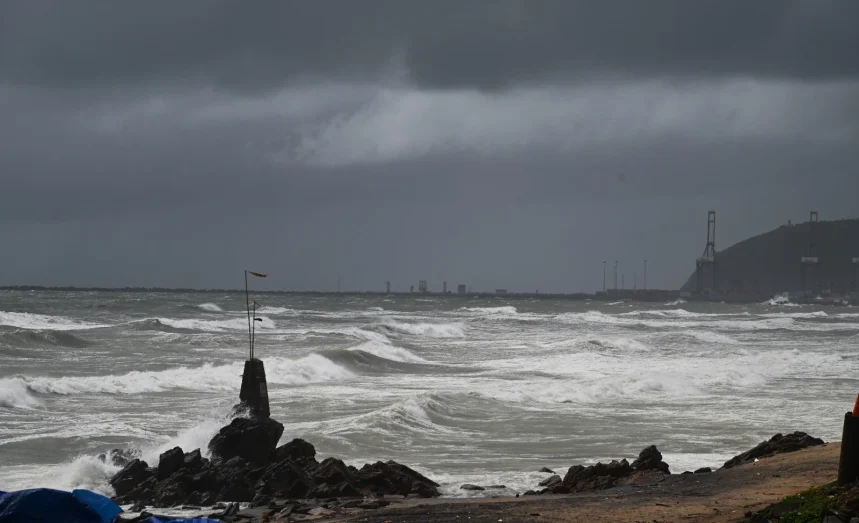
A fresh cyclone developing over the Bay of Bengal is moving towards India’s eastern coastline, putting Andhra Pradesh and neighbouring states on alert. Named Cyclone Murasu, the weather system is expected to become a severe cyclonic storm before making landfall along the south Andhra Pradesh coast on Tuesday, November 3.
The India Meteorological Department (IMD) has warned that the approaching cyclone could generate wind speeds of 100–110 kmph, with gusts reaching up to 120 kmph.
The latest development has increased concerns along the Andhra Pradesh coast, which was recently affected by Cyclone Arnab on October 28.
Cyclone Murasu Gains Strength Over the Bay of Bengal
The IMD confirmed that a deep depression over the southwest and adjoining southeast Bay of Bengal strengthened into Cyclone Murasu on Sunday, November 1.
The system was moving west-northwestwards at a speed of around 23 kmph during the six hours leading up to 11:30 am.
According to the weather agency, the cyclone was approximately 560 km from Chennai, 630 km from Nellore and 660 km from Visakhapatnam.
The system is expected to continue moving towards the northwest while gaining strength over the west-central Bay of Bengal.
November 3 Landfall: Which Areas Could Be Affected?
The weather department expects Cyclone Murasu to intensify into a severe cyclonic storm by Monday morning.
It is then likely to move towards the southern Andhra Pradesh coastline and cross between Nellore and Narsapur. The expected landfall window is around midnight on November 2 to the early hours of November 3.
The IMD has forecast sustained wind speeds of 100–110 kmph during landfall, with stronger gusts potentially reaching 120 kmph.
Coastal areas along the projected route could experience difficult weather conditions, including powerful winds and heavy rainfall.
Andhra Pradesh Faces Back-to-Back Cyclone Threats
Cyclone Murasu is approaching at a time when parts of Andhra Pradesh are still recovering from Cyclone Arnab.
The previous severe storm made landfall near Narsapur on October 28, affecting coastal areas of Andhra Pradesh and Odisha.
The possibility of another severe cyclone within a short period has raised concerns about additional damage, particularly in areas that may experience repeated heavy rainfall and strong winds.
Multiple States Likely to Receive Heavy Rain
The impact of Cyclone Murasu may extend beyond Andhra Pradesh. The IMD has forecast increased rainfall activity across several states as the system approaches the coast.
Here is the expected regional weather situation:
Andhra Pradesh: Coastal districts may experience heavy to very heavy rainfall on Monday. Extremely heavy showers are possible at isolated locations. Rainfall activity is expected to continue on Tuesday and Wednesday.
Rayalaseema: Heavy to very heavy rainfall is likely at isolated places on November 2 and 3.
Tamil Nadu: Heavy rainfall may occur at isolated locations on Monday and Tuesday.
Telangana: Rainfall is expected across several areas, with heavy showers possible at isolated places on November 2 and 3.
Odisha: Southern districts may receive heavy rainfall on Monday, with the possibility of very heavy showers at isolated places on Tuesday and Wednesday.
Warm Sea Conditions Supporting Cyclone Development
Meteorological observations suggest that favourable conditions over the Bay of Bengal are helping Cyclone Murasu strengthen.
Sea-surface temperatures of approximately 29–30°C are providing sufficient heat and moisture to support the developing storm.
Forecasting models have also indicated the possibility of rapid intensification, although some models suggest a slower strengthening process.
The cyclone’s future intensity will depend on changing atmospheric and oceanic conditions as it moves closer to the coast.
What Should People Living in Coastal Areas Do?
Residents in coastal Andhra Pradesh and other potentially affected regions should keep track of official IMD weather bulletins.
People should follow instructions issued by local administrations, avoid unnecessary travel during severe weather and take precautions against strong winds and flooding.
The next few weather updates will be important in determining the cyclone’s final path, intensity and expected impact across the region.
Disclaimer: Cyclone forecasts can change as new weather observations become available. Refer to official IMD advisories for the latest warnings and safety instructions.