


The disappearance and murder of human rights activist Jaswant Singh Khalra remains one of the most closely watched legal cases involving alleged custodial violence in independent India. His work documenting alleged illegal cremations during Punjab’s insurgency era eventually led to a Supreme Court-monitored investigation, criminal convictions of police officials, and a judgment widely regarded as a milestone in the country’s human rights jurisprudence.
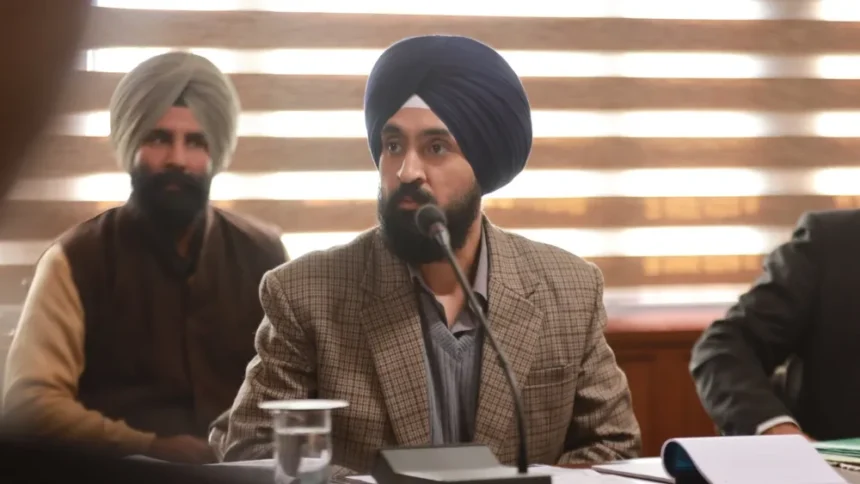
Interest in the case has resurfaced following the release of Satluj, a film inspired by Khalra’s life and his efforts to uncover the truth behind the alleged disappearances during the militancy period.
Who Was Jaswant Singh Khalra?
Jaswant Singh Khalra was a social activist from Punjab who dedicated much of his work to documenting alleged human rights violations during the years of militancy in the state.
While examining official municipal records, he claimed to have found evidence suggesting that thousands of unidentified bodies had been cremated without proper identification or legal procedures. His research focused on cremation registers and municipal documents from districts including Tarn Taran and Amritsar.
In January 1995, Khalra publicly released his findings, alleging that thousands of undocumented cremations had taken place during the previous decade. His claims attracted widespread attention from civil rights organisations, legal experts and international observers.
The Disappearance That Shocked Punjab
On the morning of 6 September 1995, Khalra was allegedly taken away by Punjab Police personnel from outside his home in Amritsar.
According to later court proceedings, eyewitnesses reported seeing uniformed officers forcing him into a vehicle before leaving the area. Following the incident, Khalra was never seen again.
His disappearance quickly transformed into a national issue, prompting demands for an independent investigation.
Supreme Court Orders Independent Probe
Within days, petitions concerning Khalra’s disappearance reached the Supreme Court of India.
His wife, Paramjit Kaur, sought judicial intervention through a habeas corpus petition, asking the court to direct authorities to produce her husband.
Considering the seriousness of the allegations, the Supreme Court transferred the investigation to the Central Bureau of Investigation (CBI). The court also observed that an inquiry conducted by the state police would not inspire public confidence because the allegations were directed against police personnel themselves.
The decision marked one of the rare occasions when the Supreme Court directly supervised the investigation into an alleged custodial disappearance.
Findings of the CBI Investigation
The CBI investigated the case under the court’s supervision and concluded that Khalra had been illegally detained before being murdered.
Its investigation identified several Punjab Police officials as accused in the case. During the lengthy legal proceedings, some accused died before the conclusion of the trial, while others were discharged.
Ultimately, six police officials were prosecuted before the trial court.
The investigation also contributed to wider proceedings before the National Human Rights Commission (NHRC), which examined allegations relating to illegal cremations in parts of Punjab during the insurgency period.
Court Convictions
After nearly a decade of legal proceedings, the trial court delivered its judgment on 18 November 2005.
Six Punjab Police officials were convicted for offences linked to Khalra’s abduction and killing.
While two officers initially received life imprisonment, four others were awarded shorter prison terms.
However, in October 2007, the Punjab and Haryana High Court enhanced the sentences of the remaining four officials to life imprisonment, bringing all six convictions in line.
The matter later reached the Supreme Court, which upheld the life sentences in April 2011, affirming the findings of the lower courts.
Jaswant Singh Khalra Case Timeline
| Date | Event |
|---|---|
| 1984–1994 | Alleged illegal cremations reported during Punjab’s militancy years. |
| 16 January 1995 | Khalra publicly releases findings on alleged secret cremations. |
| 6 September 1995 | Khalra allegedly abducted outside his Amritsar residence. |
| 11 September 1995 | Supreme Court begins habeas corpus proceedings. |
| 15 November 1995 | Supreme Court directs the CBI to investigate the case. |
| 1995–1996 | CBI conducts investigation under judicial supervision. |
| 18 November 2005 | Trial court convicts six police officials. |
| 16 October 2007 | High Court enhances all sentences to life imprisonment. |
| 11 April 2011 | Supreme Court upholds life imprisonment for all six convicts. |
Why the Case Continues to Be Significant
The Jaswant Singh Khalra case occupies an important place in India’s legal and human rights history because it established that allegations of custodial killings involving law enforcement officers could be subjected to independent judicial scrutiny.
The proceedings reinforced the role of habeas corpus petitions, highlighted the importance of court-monitored investigations, and contributed to discussions on police accountability and constitutional protections against unlawful detention.
Beyond the criminal convictions, the case also encouraged broader institutional examination of allegations relating to illegal cremations during Punjab’s insurgency period, making it one of the most consequential human rights cases in post-independence India.
FAQs
Why is the Jaswant Singh Khalra case considered historic?
It is regarded as a landmark case because it resulted in the conviction of police officials in a custodial disappearance case and reinforced judicial oversight over alleged human rights violations.
What did Jaswant Singh Khalra investigate?
He investigated allegations that unidentified bodies were cremated without following legal procedures during Punjab’s militancy period.
When did the Supreme Court give its final verdict?
The Supreme Court upheld the life imprisonment of all six convicted police officials on 11 April 2011.
What is the significance of the case today?
The case continues to be referenced in discussions on custodial violence, enforced disappearances, police accountability, and the protection of fundamental rights under the Constitution of India.