

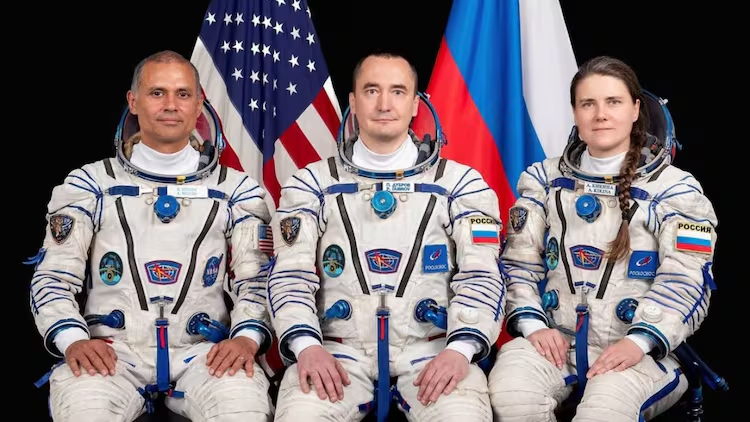
NASA astronaut Anil Menon is preparing for his first journey to space, but his mission extends far beyond reaching orbit. Scheduled to launch on July 14 aboard the Soyuz MS-29, Menon will spend nearly 200 days aboard the International Space Station conducting research that could play a crucial role in future human missions to Mars.
The astronaut, who was born in Minneapolis to an Indian father and a Ukrainian mother, will travel alongside Russian cosmonauts Pyotr Dubrov and Anna Kikina as part of Expeditions 74 and 75.
Studying How the Human Body Changes in Space
One of Menon’s primary responsibilities during the mission will be investigating how prolonged exposure to microgravity affects the human body. While gravity constantly influences blood circulation and fluid distribution on Earth, those systems behave very differently in space.
Without gravity pulling fluids downward, blood and other bodily fluids gradually shift toward the upper body and head. This phenomenon, known as cephalad fluid shift, often causes astronauts to experience facial swelling, increased pressure in the head, and congestion-like symptoms during spaceflight.
Scientists believe these fluid changes may contribute to a condition known as Spaceflight-Associated Neuro-ocular Syndrome (SANS), which can affect eyesight during long-duration missions.
Researching Vision Problems in Orbit
During his stay aboard the ISS, Menon will use ultrasound technology to monitor how blood vessels and fluid flow change in microgravity. Researchers hope the data collected will help them better understand why many astronauts develop vision-related issues after spending extended periods in space.
SANS has become one of the major health concerns for astronauts undertaking long-duration missions. The condition can lead to swelling of the optic nerve and structural changes in the eye, potentially affecting vision over time.
Understanding these changes is considered critical as space agencies prepare for future crewed missions beyond the Moon and eventually to Mars.
Producing Medical Fluids in Space
In addition to studying human physiology, Menon will participate in an experiment focused on producing intravenous (IV) fluids directly aboard the space station.
The project aims to create sterile saline solutions using recycled drinking water available on the ISS. If successful, the technology could reduce the need to transport large quantities of medical supplies from Earth.
For future deep-space missions where resupply opportunities will be limited or unavailable, the ability to manufacture essential medical fluids on demand could significantly improve crew safety and mission sustainability.
From Disaster Zones to Outer Space
Before joining NASA’s astronaut program, Menon built a distinguished career as an emergency physician and flight surgeon. He provided medical assistance following major natural disasters, including earthquakes in Haiti and Nepal, and worked with climbers in high-altitude environments around Mount Everest.
He also became the first physician hired by SpaceX, where he helped develop medical support systems for commercial astronauts.
Selected as a NASA astronaut candidate in 2021, Menon’s upcoming mission marks the culmination of years spent working in some of the world’s most demanding environments.
A Mission That Could Shape Future Mars Exploration
As humanity looks toward long-duration missions to the Moon and Mars, understanding the effects of weightlessness on the human body remains a major challenge. Through his research aboard the International Space Station, Menon will help scientists gather valuable insights into how astronauts can remain healthy during journeys lasting months or even years.
His mission combines medicine, engineering, and space science, with findings that could influence the design of future exploration missions and improve the safety of astronauts traveling deeper into the solar system.