


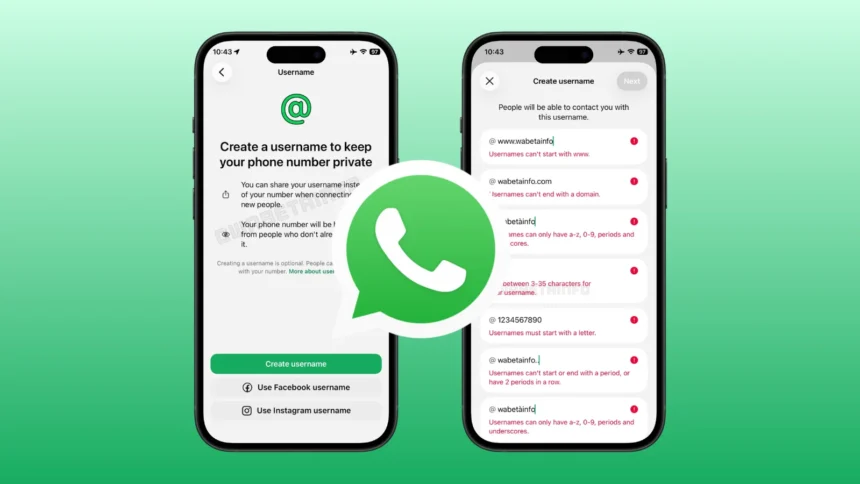
WhatsApp is preparing to roll out a long-awaited username feature that will let users connect without revealing their phone numbers. The update is expected to give users greater control over their privacy, especially when chatting with people they don’t know personally.
While the feature has been welcomed for enhancing privacy, cybersecurity specialists believe it could also create new challenges as scammers look for fresh ways to target users.
WhatsApp to Introduce Usernames
For years, WhatsApp has required users to share their mobile numbers to communicate. The upcoming update changes that by allowing users to create a unique username that can be shared instead of a phone number.
The feature will be optional, and users will still need a valid phone number to register a WhatsApp account. Once enabled, people can connect using a username, making conversations more private without exposing personal contact details.
This approach is already common on platforms like Telegram, Signal, and Instagram, where usernames serve as public identities while keeping phone numbers private.
Why the Feature Matters
One of the biggest advantages of usernames is improved privacy. Users will no longer have to give their phone numbers to every new contact, reducing the chances of unwanted calls, spam messages, or misuse of personal information.
The feature could be particularly useful for freelancers, small business owners, online sellers, and people interacting in community groups who want to communicate without revealing their personal number.
Cybersecurity Risks Could Increase
Although usernames offer better privacy, experts warn they could also become a new tool for cybercriminals.
Scammers may create usernames that closely resemble trusted brands, banks, companies, or even individuals. Since usernames can look very similar, victims may find it difficult to distinguish fake accounts from genuine ones.
Cybercriminals may then use these fake identities to send phishing links, request OTPs, or convince users to share financial information.
AI Could Make Scams More Convincing
The rapid growth of artificial intelligence has already transformed online fraud. Fake conversations, realistic profile pictures, and even cloned voices are becoming easier to create.
With usernames replacing visible phone numbers in many conversations, scammers could combine fake identities with AI-generated content to make fraud attempts appear more authentic than ever.
Experts say users should always verify unexpected requests for money or sensitive information through another trusted method before responding.
How Users Can Stay Safe
As the username feature rolls out, following basic cybersecurity practices will become even more important.
Users should:
- Verify unknown contacts before trusting them.
- Never share OTPs, passwords, or banking details in chats.
- Avoid clicking on suspicious links from unfamiliar accounts.
- Enable WhatsApp’s two-step verification for added account security.
- Report and block accounts that appear suspicious or impersonate others.
A Step Forward for Privacy
The introduction of usernames marks one of WhatsApp’s biggest changes in recent years. By reducing the need to share phone numbers, the platform aims to improve user privacy and offer greater control over digital interactions.
However, experts believe that while the feature brings clear benefits, users must remain alert to evolving scam techniques. Strong security practices and careful verification of unknown contacts will be essential to ensure the new feature enhances privacy without creating new opportunities for online fraud.