

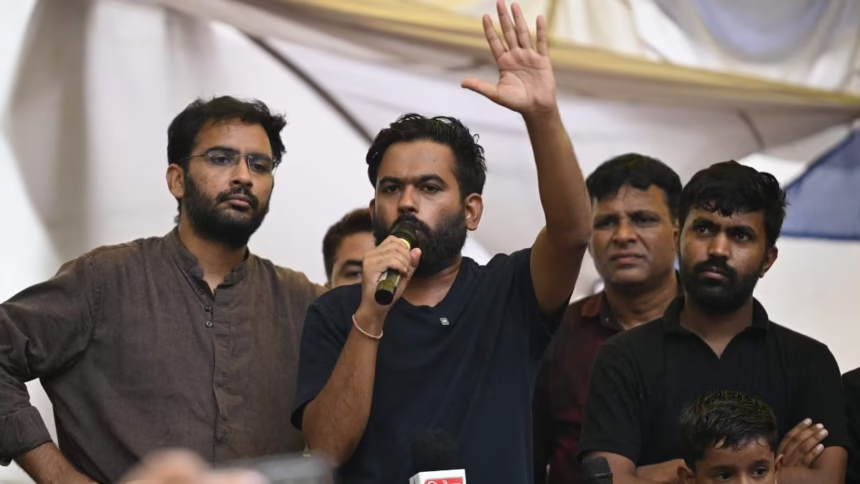
New Delhi, July 25, 2026: A social media post that began as satire has transformed into one of India’s most prominent youth-led protest movements. At the center of the campaign is Abhijeet Dipke, founder of the Cockroach Janta Party (CJP), who has emerged as the leading face of protests demanding accountability over alleged examination paper leaks and student-related issues.
The movement gained national attention after large demonstrations at Jantar Mantar in New Delhi and culminated in the resignation of Union Education Minister Dharmendra Pradhan.
How the Cockroach Janta Party Started
The movement traces its origins to a post shared by Dipke on May 16, in which he wrote:
“What if all cockroaches come together?”
The post quickly went viral on social media following a controversy surrounding remarks about unemployed youth. What began as an online expression of frustration soon inspired supporters to launch the Cockroach Janta Party, a satirical platform that rapidly evolved into an organized public movement.
Within weeks, the campaign attracted widespread attention from students, job seekers, and young citizens across the country.
Massive Student-Led Demonstrations
The Cockroach Janta Party organized protests demanding action over alleged irregularities in competitive examinations, including the NEET paper leak controversy.
Thousands of protesters assembled at Jantar Mantar in Delhi, while demonstrations were also reported in several other cities. The movement focused on transparency in recruitment and examinations, accountability from authorities, and justice for affected students.
Who Is Abhijeet Dipke?
Abhijeet Dipke is originally from Aurangabad, Maharashtra. He comes from a modest family and has often spoken about his upbringing and the challenges faced during his early life.
Before returning to India, Dipke was studying Public Relations in Boston, Massachusetts, after moving to the United States in 2023.
His public speeches frequently reference constitutional values and social justice, with Dr. B.R. Ambedkar remaining one of his major inspirations.
Experience in Political Communication
Prior to pursuing higher education abroad, Dipke worked in digital political communication, where he gained experience creating online campaigns using satire, memes, and social media engagement.
Although he has previously worked with political organizations, the Cockroach Janta Party presents itself as a youth-driven movement focused on student issues and public accountability.
Social Media Fuelled the Movement
The campaign expanded rapidly through platforms such as X and Instagram.
Supporters created websites, videos, memes, and digital campaigns that helped spread the movement nationwide. Within a short period, the Cockroach Janta Party became one of the most discussed political topics across Indian social media.
The online momentum eventually translated into large-scale protests on the ground.
Dharmendra Pradhan’s Resignation
Following days of demonstrations and negotiations, Union Education Minister Dharmendra Pradhan resigned.
Addressing supporters after the announcement, Dipke described the resignation as a significant victory for peaceful public participation and urged protesters to continue demanding reforms through democratic means.
What the Protesters Want Next
Despite celebrating the resignation, CJP leaders have said additional issues still require attention.
Their key demands include:
- Action against officials responsible for the police crackdown on protesters.
- Withdrawal of legal cases registered against demonstrators.
- Compensation for families affected by the examination controversy.
- Stronger safeguards to prevent future examination paper leaks.
- Greater transparency in competitive examinations and recruitment processes.
A New Face of Youth Politics
Abhijeet Dipke’s rise from a social media commentator to the face of a nationwide protest highlights the growing influence of digital platforms in shaping public movements. Whether the Cockroach Janta Party develops into a long-term political organization or remains a student-led campaign, it has already become one of the most notable examples of Gen-Z activism in India.