


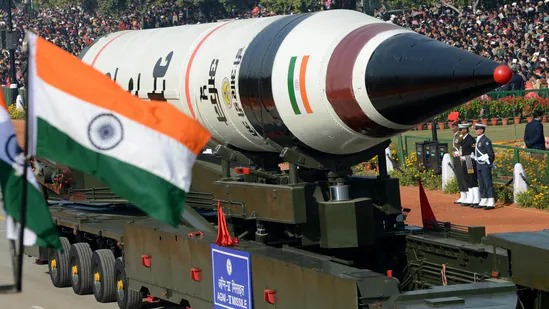
After the U.S. used the powerful GBU-57 bunker buster bomb on Iran’s nuclear site on 22 June, India has also started strengthening its defense capabilities. India’s DRDO (Defence Research and Development Organisation) is now working on a new version of the Agni-5 missile.
This missile, which is usually used to carry nuclear warheads, is now being modified to carry a very heavy conventional (non-nuclear) warhead — up to 7500 kg. It is being specially designed to destroy deep underground enemy bunkers.
🔥 How Powerful Is This New Missile?
- This new missile will be able to go deep into the ground (80 to 100 meters) before exploding.
- It will destroy enemy bunkers hidden under strong concrete layers.
- Unlike the U.S., which uses expensive bomber aircraft to drop such bombs, India will launch this missile directly, making it cheaper and faster.
🚀 Two Versions Being Developed:
- Airburst Version – Explodes in the air above the target.
- Bunker-Buster Version – Goes deep into the ground and explodes inside.
Both versions will carry about 8 tons of explosive – making it one of the most powerful non-nuclear warheads in the world.
⚡ Range and Speed:
- The range of the new version will be about 2500 km, which is less than the original Agni-5.
- However, its speed will be very high – between Mach 8 and Mach 20 (8 to 20 times the speed of sound), putting it in the hypersonic missile category.
🎯 Why Is This Important?
This powerful and fast missile can destroy key enemy locations, like:
- Command centers
- Missile bases
- Sensitive military bunkers
It is mainly developed to counter threats from China and Pakistan.
In simple words, this new Agni-5 version will help India strike deep enemy targets quickly and powerfully — even those hidden far below the ground.